
 Enlarge
 Email
Email Print
PrintChemotherapy (chemo) destroys cells that grow rapidly, including those in the bone marrow that produce platelets. A low platelet count, also known as thrombocytopenia, is a common chemo side effect. When you get cut or bruised, platelets form plugs in the blood vessels to stop the bleeding. A low platelet count can lead to serious blood loss, which can damage internal organs.
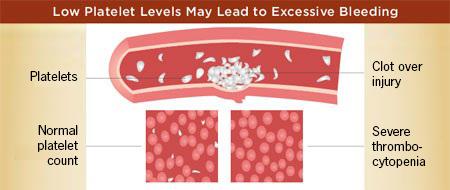
During chemo you should try to avoid getting cut, bruised, or injured in any way that may cause bleeding:
- Shave with an electric razor instead of a blade
- Use a soft-bristle toothbrush
- Wear proper fitting shoes all the time–indoors and out–to avoid cuts on your feet
- Blow your nose carefully
Your doctor and care team will keep track of your platelet counts.
Treatment
If your platelet count gets too low, you may need a platelet transfusion. Ask your doctor to explain the risks and benefits of platelet transfusion.
Ask Your Doctor:
| Print this worksheet |
|
A Closer Look: Trevor*
 |
|---|
| Trevor is on an aggressive chemo treatment for lung cancer. His treatment is known to be myelosuppressive. This means it reduces the bone marrow activity that creates new blood cells. |
| Trevor is prepared to do what he can to get the most out of his treatment. He asks questions, reads up on his cancer and chemo, and follows his doctor's advice. |
| One day, between chemo treatments, he falls on the ice and cuts his scalp. Unable to stop the bleeding, he goes to the emergency room. |
| Trevor's platelet count is found to have dropped dramatically since his last blood test 2 weeks earlier. |
| Trevor's cut is treated, but he is hospitalized so that he can be treated for thrombocytopenia. He is given a platelet transfusion. |
*This is a fictional case study based on chemo patient experiences. Your experience is unique. Your doctor and care team will create a plan that will best treat your type of cancer and manage your chemo side effects.
-
The Chemotherapy and Infection Discussion Guide can help you understand your
risk of infectionInfection can be a serious side effect of strong chemo. Find out the factors that affect your risk of infection. Simply answer a few questions, and then print your results to share with your doctor.
Use the Chemotherapy and Infection Discussion Guide to find out more.