
 Enlarge
 Email
Email Print
PrintWhite blood cells help your body fight off infection. Strong chemotherapy (chemo) can lower your white blood cell count. When your body doesn't have enough of a type of white blood cell called the neutrophil, the condition is called neutropenia.
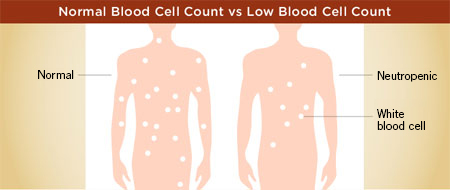
| Before strong chemotherapy: | With strong chemotherapy: |
|---|---|
| White blood cells are a key part of your immune system. At natural levels, white blood cells help protect your body against infection. | Strong chemotherapy can lower the number of infection-fighting white blood cells in your body, which may weaken your immune system and increase your risk for certain types of infection. |
Cancer patients who have neutropenia have a greater risk of infection.
Your risk increases when your white blood cell count gets low and stays low for a long time.
Your doctor and care team will keep close track of your white blood cells during strong chemo. Talk with your doctor and care team about symptoms you may have when your white blood cell count is low and when you should notify them.
Signs of Infection
Fever may be the first and only sign that you have an infection. Since strong chemo that also lowers your white blood cell count may increase your risk of getting an infection, you should check your temperature according to your doctor's recommendations.
Neutropenia with fever is referred to as febrile neutropenia.