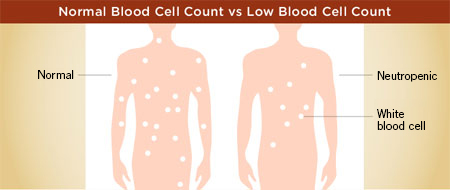
| Managing a Low White Blood Cell Count
Chemotherapy is usually given in cycles, with periods of rest that give your body time to regain strength and replace healthy cells lost during treatment. However, neutropenia, a low number of certain white blood cells, is a common chemotherapy side effect of certain types of chemotherapy that can disrupt your chemo schedule.
A low white blood cell count means your immune system isn't as strong as it could be and that you are at increased risk for infection. The fewer white blood cells you have and the longer you remain without enough, the more at risk you become for developing a potentially life-threatening infection.
As a result, your doctor may need to delay cancer treatment or reduce your chemotherapy dose until your low white blood cell count increases and the possibility of infection is reduced. If you are neutropenic and you develop a fever or get an infection, you may need to be hospitalized until your infection is cured and your number of white blood cells returns to levels high enough to fight infections in the future. The good news is your doctor can help
lower your risk of infection.
Your doctor has carefully determined your chemotherapy dose and schedule to produce the best opportunity for a successful outcome. In certain tumor types, maintaining dose and schedule can improve your outcomes. Studies show that for certain types of cancer, chemotherapy produces the best results when patients receive the full dose on schedule.2,4-7 To understand more about chemotherapy cycles and schedules click here.
To understand whether you may have an infection, click here.
Important product safety information
Ruptured spleen (including fatal cases), a serious lung problem called acute respiratory distress syndrome, and sickle cell crises have been reported.
Call your doctor or seek emergency care right away if you have abdominal or shoulder tip pain, shortness of breath, trouble breathing, or a fast rate
of breathing. In rare cases, serious allergic reactions can occur, causing shortness of breath, wheezing, dizziness, swelling around the mouth or eyes,
fast pulse, sweating, and hives. Sometimes these symptoms could come back within days after stopping treatment for the allergic reaction. If you start to
have any of these symptoms, call your doctor or seek emergency care right away.
In a clinical study, mild to moderate bone pain occurred in 31%
of the patients taking Neulasta® and in 26% of the patients taking a placebo injection. In most cases, bone pain was controlled with
a non-narcotic pain reliever, such as acetaminophen. Other common side effects reported by patients in the study taking either Neulasta®
or placebo were consistent with the underlying cancer diagnosis and its treatment with chemotherapy, with the exception of bone pain.
If you have any questions about this information, be sure to discuss them with your doctor. You are encouraged to report negative side effects of
prescription drugs to the FDA. Visit www.fda.gov/medwatch or call 1-800-FDA-1088.
UNDERSTANDING CANCER
TREATING CANCER WITH CHEMOTHERAPY
CHEMOTHERAPY SIDE EFFECTS
TREATING CANCER IN OTHER WAYS
TRACKING YOUR TEST RESULTS
UNDERSTANDING INSURANCE AND TAX ISSUES: INSURANCE TIPS
WEB RESOURCES AND ORGANIZATIONS
TOOLS FOR ORGANIZING YOUR CANCER INFORMATION
FOR CAREGIVERS
GLOSSARY OF CANCER TERMS
REGISTER FOR PROGRAMS
FOR HEALTHCARE PROFESSIONALS
|
 |
|